
Summary: Huron County winters take a serious toll on roofs, and if your home is showing signs of wear, summer 2026 is the right time to replace it. This guide breaks down the warning signs, the best roofing materials for Ontario’s freeze-thaw climate, what replacement costs look like in 2026, and how to pick the right local contractor.
ConPro Contracting serves Exeter, Grand Bend, Goderich, Clinton, Strathroy, and surrounding Southwestern Ontario communities with fully licensed residential roofing services.After another Huron County winter, freeze after thaw after freeze, a lot of roofs across Exeter, Grand Bend, Goderich, Clinton, and Strathroy are showing their age.
Shingles that made it through the fall are now curling at the edges.
Granules have been washing into gutters since March.
Some homeowners are finding water stains in the attic that they didn’t notice before.
If any of that sounds familiar, summer 2026 is the time to deal with it.
A roof replacement is one of the biggest home improvement decisions you’ll make, and one of the most worthwhile.
Getting it right means choosing the right material, the right timing, and the right contractor.
This guide breaks down everything Southwestern Ontario homeowners need to know before they book.
Why Exeter Roofs Wear Out Faster Than You’d Expect
Ontario’s climate is not kind to roofing materials.
The problem isn’t just cold winters, it’s the constant swing between cold and mild.
One week in February it’s -15°C, the next it’s +5°C and raining.
That cycle is hard on shingles. Water works its way into small cracks, freezes, expands, and then the crack is wider the next time around.
Do that dozens of times over a few winters and even decent-quality shingles start to give out.
According to the Canadian Asphalt Shingle Manufacturers Association, a well-maintained asphalt shingle roof lasts 20 to 30 years under normal conditions.
But in Ontario’s freeze-thaw climate, roofs installed in the 1990s and early 2000s are frequently failing well before that upper range.
If your home was built between 1990 and 2005, there’s a real chance your roof is already past its best years, and just hasn’t leaked badly enough yet to force the issue.
Check your gutters this spring.
If you’re finding coarse, sand-like granules collecting at the downspouts, that’s the protective coating coming off your shingles.
Granule loss is one of the clearest indicators that asphalt is starting to degrade and UV protection is compromised.
Other warning signs include shingles that are curling upward at the corners, visible cracking or splitting across the surface, any sagging in the roof deck, and, most critically, water stains on attic sheathing or interior ceilings.
None of these get better on their own.
When to Replace vs. When to Repair
Not every roofing problem calls for a full replacement.
Targeted repairs; fixing flashing around a chimney, replacing a few damaged shingles, resealing a vent, make sense when the underlying roof is still in good condition, and the damage is isolated.
Our team at ConPro handles both residential roofing repairs and full replacements, and the honest answer is: we’ll tell you which one your roof actually needs.
A roof inspection is a good starting point if you’re unsure. A proper inspection looks at shingle condition, flashing, underlayment edges, soffit and fascia, and the attic side of the roof deck, not just a walk-around from the ground. It gives you a clear picture of where things stand before any money changes hands.
The calculation shifts once a roof is past 20 years old, or once more than 20-25% of the surface shows wear.
At that point, repair costs tend to stack up quickly, and you’re investing money into a roof that will still need full replacement within a few years.
A properly installed new roof, on the other hand, gives you another 25 to 40 years depending on the material, and immediately improves your home’s insulation, energy efficiency, and resale value.
What Southwestern Ontario Homeowners Are Choosing in 2026
The roofing material market has changed considerably over the past decade.
Here’s what’s popular across Huron and Middlesex County right now, and why.
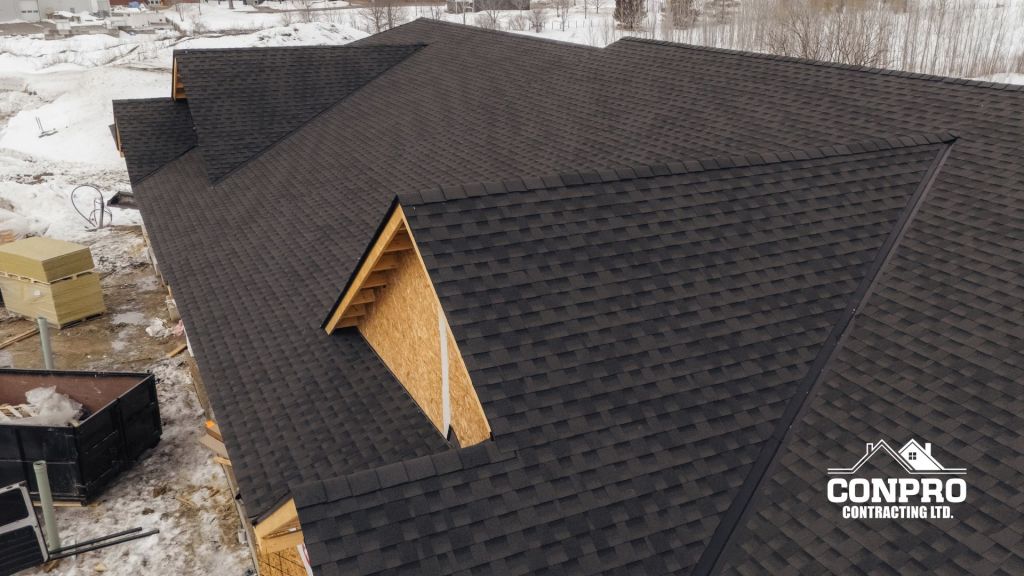
Architectural (Laminate) Asphalt Shingles
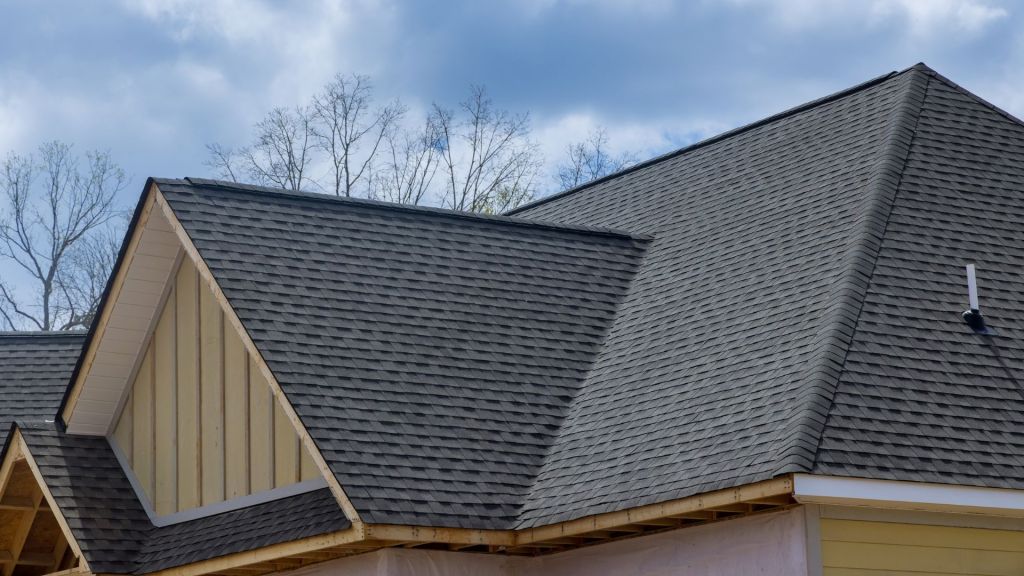
These have largely replaced the old-style three-tab shingles that were standard on most Ontario homes built before 2010.
Architectural shingles are thicker, heavier, and layered, giving them a dimensional look that resembles natural slate or cedar shake. They’re rated for wind resistance up to 130 mph and carry warranties of 30 to 50 years, compared to the 15 to 20-year lifespan typical of three-tab.
For most homes in Exeter and surrounding areas, architectural shingles are the practical and cost-effective choice.
SBS Modified Asphalt Shingles
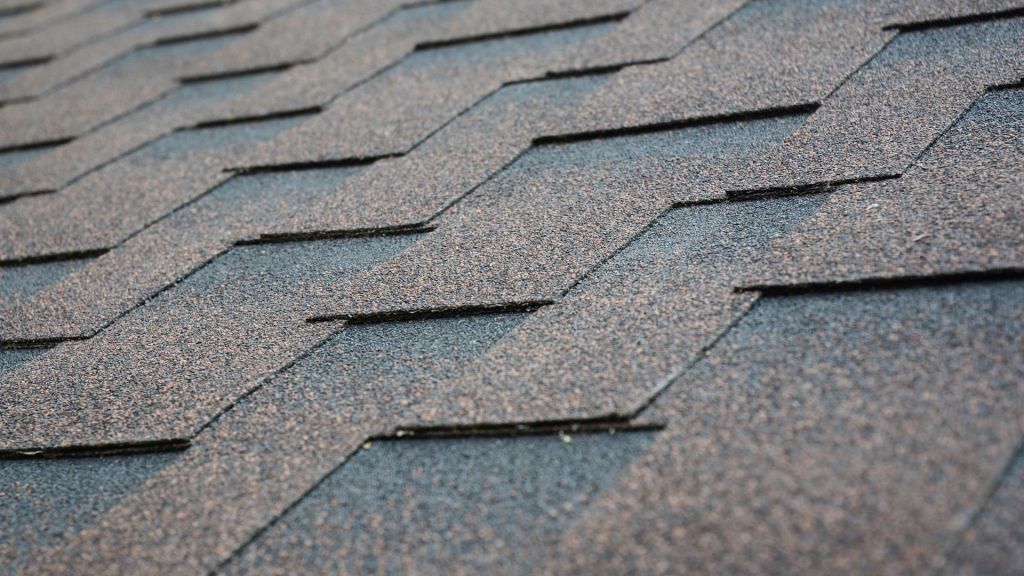
SBS stands for styrene-butadiene-styrene, a rubber polymer blended into the asphalt during manufacturing.
The result is a shingle that stays flexible even in cold temperatures, making it significantly more resistant to the cracking that Ontario winters cause in conventional shingles.
These are gaining traction across Southwestern Ontario because they hold up better through the freeze-thaw cycles that are hard on standard asphalt.
They cost more upfront, but they earn that difference back in lifespan and performance.
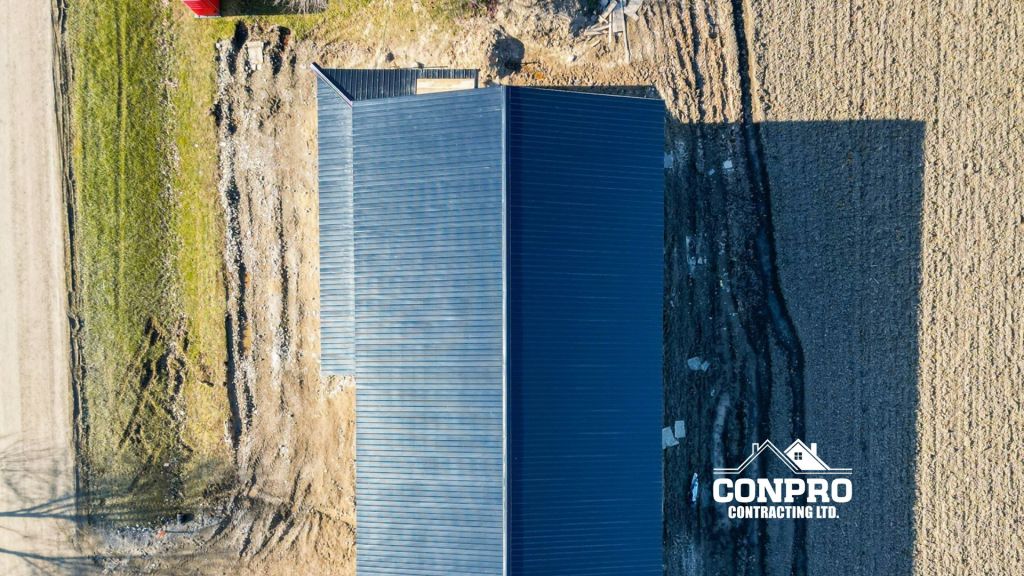
Steel Roofing
Steel roofing has been common on agricultural properties and cottages in Huron County for years.
It’s increasingly being specified for residential homes too, particularly when owners are planning to stay long-term.
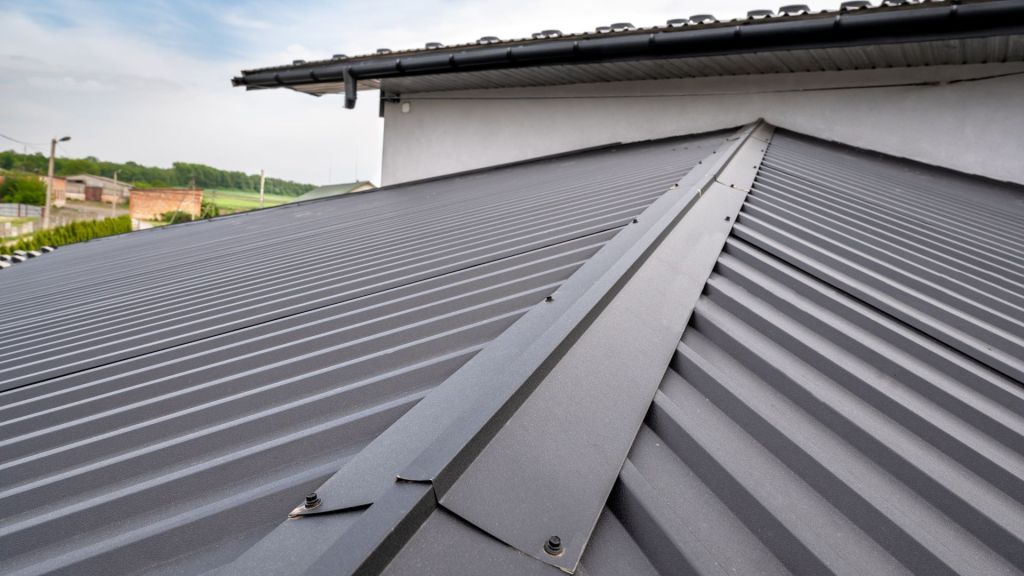
A quality steel roof carries a 40 to 50 year lifespan, handles heavy snow loads without issue, and requires almost no maintenance beyond periodic cleaning.
For lakeside properties near Grand Bend or Bayfield, the durability argument is even stronger given the wind and moisture exposure.
For homes with flat sections; garage roofs, additions, low-slope areas, ConPro also installs Duradek and flat roofing systems designed for those specific conditions. Flat roofs require different materials and installation methods than pitched roofs, and getting that wrong is expensive.
The Importance of Proper Underlayment and Ventilation
Two things that don’t get enough attention when homeowners are comparing quotes: underlayment and attic ventilation.
Underlayment is the moisture barrier installed directly on the roof deck beneath the shingles.
Ice and water shield, a self-adhering, rubberized membrane, is now recommended for full-deck coverage on Ontario homes, not just along the eaves.
Given the ice damming that’s common in Exeter and surrounding communities after heavy snowfall, full-coverage ice and water shield is worth every dollar. It’s the difference between a small roof issue and water in your walls.
Attic ventilation matters just as much.
Poor ventilation traps heat and moisture beneath the shingles, accelerating deterioration from the underside out, and you won’t see the damage until it’s already significant.
Proper soffit and ridge ventilation extends the life of any roofing material and keeps your home’s heating and cooling costs lower year-round.
When ConPro installs a new roof, underlayment and ventilation are part of every project, not optional add-ons.
What a Roof Replacement Costs in Ontario in 2026
Roofing costs vary based on the size and pitch of your roof, the material you choose, and the condition of the existing deck.
For a typical single-family home in Exeter or Goderich, here’s a realistic range:
- Architectural asphalt shingles: $8,000 – $14,000 for most homes
- SBS modified asphalt: $11,000 – $17,000, depending on size
- Steel roofing: $14,000 – $22,000+ for residential applications
Material prices in Canada have increased 8 to 12 percent year over year since 2022, driven largely by supply chain costs and labour.
Waiting another season doesn’t usually save money, it tends to cost more and risks the additional damage that a deteriorating roof causes to sheathing, insulation, and interior finishes.
If you want a clear picture of what your specific home will cost, request a free quote from ConPro.
Quotes are detailed and itemized, no surprises.
Book Early. Summer Fills Fast.
The window between April and September is when most Southwestern Ontario homeowners want roofing work done, and contractor schedules reflect that demand.
Experienced local crews have limited capacity.
Homeowners who book in early spring consistently get better scheduling flexibility and aren’t left waiting until October for a job that should have been done in July.
If your roof is showing wear, the time to get a quote is now, not after the first leak shows up on a rainy Thursday in June.
Why ConPro Is the Right Call for Exeter Area Homeowners
Some contractors will drive out from London or the GTA to do a roofing job in Huron County. ConPro is different, we’re based right here at 141 Main St S in Exeter, and we’ve been building and renovating homes across this region for years.
Our projects span custom home builds, full exterior renovations, and residential additions, roofing is part of a broader understanding of how homes in this area are built and what they need.
We’re fully licensed and insured.
We install ice and water shield, proper underlayment, and ventilation as standard, not as upsells.
We carry warranties on both materials and labour. And when a project is done, we’re still local, still reachable, and still accountable.
That matters in a way it doesn’t when you hire someone who drives four hours to get here.
You can see our completed work, including roofing projects, in our project gallery. The quality speaks for itself.
Ready to Get Started?
If your roof is over 15 years old, showing granule loss, or has made it through its last Ontario winter on borrowed time, don’t sit on it.
Summer 2026 booking is already underway.
Contact ConPro Contracting today for your free residential roofing quote!
We serve Exeter, Grand Bend, Goderich, Clinton, Strathroy, Bayfield, and nearby communities in Southwestern Ontario.
Call us at 519-235-4488 or fill out the quote form on our site, and get your summer project booked before the season fills up!